Showing posts with label Fascinating Articles. Show all posts

Saturday, April 30, 2016

Creating False Memories

Neuroscientists in France have implanted false memories into the brains of sleeping mice. Using electrodes to directly stimulate and record the activity of nerves cells, they made artificial associative memories that lasted while the animals slept and then influenced their behavior when they woke up.
Manipulating memories by messing with brain cells is nothing new in neuroscience labs. In 2014, one team of researchers used a technique called optogenetics to label the cells encoding fearful memories in the mouse brain and switch them on and off, and another used it to identify the cells encoding positive and negative memories, so that they could change positive memories into negative ones and vice versa.
This new work, published March 9, 2015 in the journal Nature Neuroscience, shows for the first time that artificial memories can be put into the brains of sleeping animals. It also gives scientists more details about how populations of nerve cells encode spatial memories and the important role that slep plays in making these memories stronger.
Karim Benchenane of the French National Centre for Scientific Research in Paris and his colleagues put electrodes into the brains of 40 mice, targeting the medial forebrain bundle(MFB), a component of the reward circuitry which has at least 3 different cells types that encode the memories needed for spatial navigation. Then they left the mice to explore their environment and monitored the responses of their neurons to identify place cells, each of which fired when one of the animals was in a specific location in their surroundings. In one experiment, performed on 5 awake mice, they timed the electrical stimulation of the MFB to correspond with the firing of a specific place cell.
This paired stimulation gave the mice a false memory. The mice linked the MFB stimulation with the specific location encoded by the cell, and thus spent 4- to 5-times more time in that location than two control mice who received MFB stimulation that did not correspond with a place cell firing. Place cells are known to 'replay' their activity patterns during sleep, and this is thought to strengthen newly formed memories.
To research further, the researchers repeated their experiments in 5 sleeping mice. Having already identified place cells while the mice explored their environment, the researchers let them fall asleep, and then paired the firing of each selected place cell in each one with the stimulation of the MFB. Later on, these mice, as well, showed a large preference for that specific location. In contrast, the control mice, who received random MFB stimulation that was not paired with the firing of a place cell wandered around with no liking to any particular place.
Even so, other work shows that false memories can be implanted into the human brain without advanced technology. In a recent study, nearly 3/4 of participants reported having in depth false memories of a crime they didn't commit.
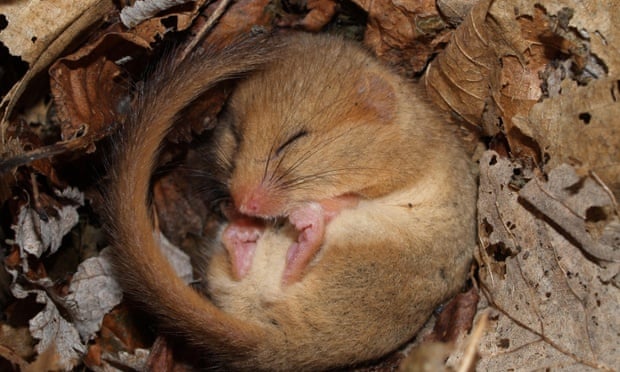
By directly manipulating the brains of sleeping mice, researchers tricked the animals into thinking they had received a reward at a specific place.Photo Credit

The Neurobiology Behind Individuality

When a group of genetically identical mice lived together in the same complex for three months, mice that explored their surroundings more broadly grew more new neurons than those who were less adventurous, according to a study published May 9, 2013 in Science Magazine. This link between inquiring behaviors and the adult growth and development of nervous tissue shows that brain plasticity can be shaped by experience and suggests that this may promote individuality, even in genetically identical organisms.
Scientists have long tired to tackle the question of how individual differences in behavior and personality develop in terms of the way genes and the individual's surroundings interact. "But there is next to nothing [known] about the neurobiological mechanisms underlying individuality" says Gerd Kempermann of the German Center for Neurodegenerative Diseases in Dresden.
A logical way to study this would be to look at how the brain's structure and function change over time (the brain's plasticity). This plasticity is hard to study, though, because it takes place mostly at the synaptic level, so Kempermann and his colleagues decided to look at the growth of new neurons in the adult hippocampus, which can be found easily. Earlier studies have shown that activity increases the adult growth an development of nervous tissue in groups of genetically identical mice, but there were differences between individuals in the amount of neuron growth.
To find out why, Kempermann and his colleagues housed 40 genetically identical female inbred mice in a 5-square meter, 5-level enclosure filled with different sorts of objects made to encourage activity and exploration. The mice were tagged with radio-frequency-infer-red transponders and had 20 antennas in the complex that caught their every movement. After 3 months, the researchers assessed the growth and development of nervous tissue in the mice by counting their fast-multiplying precursor cells, which had been numbered before the study began.
The researchers saw that individual differences in exploratory behavior corresponded with individual differences in the numbers of new neurons generated. "To our knowledge, it's the first example of a direct link between individual behavior and individual brain plasticity," said Kempermann.
However, be cautious about putting all the differences on their surroundings. Even though the mice in the study were genetically the same, they were not behaviorally identical to begin with. It is clear that some variation happens at an extremely early stage, making the mice more or less likely to explore.
These findings could help explain why human identical twins raised in the environment end up with different personalities. Photo Credit

Friday, April 8, 2016

Artificial Skin That can Give People with Prothestics a Sense of Touch

Artificial skin made in a lab can "feel" similar to the way a fingertip senses pressure and could one day let people feel sensation in their prosthesis limbs. Researchers were able to send the touching sensation as an electric pulse to the relative "touch" brain cells in mice.
The stretchy, flexible skin is made of a man made rubber that has been manufactured to micron-scale pyramid like structures that make it extra sensitive to pressure. The researchers sprinkled this pressure sensitive rubber with microscopic cylinders of carbon that conduct electricity very well so that when the material is touched, a series of electric pulses is given off by the sensor. This series of pulses is then sent to the brain cells in a way that mirrors how touch receptors in human skin send sensation to the brain.
To test if the skin could make electric pulses that the brain could respond to, the researchers connected the synthetic skin to a blue LED light. When the skin was touched, it sent electric signals to the LED light, which pulsed in response. The sensors translated that pressure pulse into electric pulses. When the sensors in the skin sent the electric pulses to the LED- very similar to the way touch receptors in real human skin send touch sensation signals to the brain- a blue light flashed.
The researchers added a special protein that cause brain cells to react to blue light and added them to the mice brain cells. The protein let the LED act like a receptor cells in the skin. When the light flashed it sent a signal to the brain that the artificial skin had been touched. This experiment showed that, when the artificial skin was touched, the brain would respond in the same way as brains react to real skin being touched.
The next step would be to the skin in other animals and the eventual goal is to be able to stimulate the human brain and have the skin available for people.

Aerogel: The World's Least Dense Solid

Aerogels are any material of a group of very light or porous solids. The lightest aerogel is less than four times as dense than dry air. They are made by certain gels being heated under pressure, causing the liquid in the gel to lose surface tension and become supercritical, or in a state between a liquid and gas. In this state, the liquid can be removed from the gel by adding additional heat, without messing up the porous structure made by the gel's solid component.
Silica-, melamine-, and carbon- based aerogels have been manufactured in the past. The lightest are silica-based aerogels and some have been appropriately nicknamed 'solid smoke' or 'frozen smoke'. These lightweight aerogels are almost transparent. Heavier aerogels were first produced in 1931 and have since been used to detect fast moving particles given off by particle accelerators
Newer, lighter aerogels with fairly high insulating properties are being tested to replace more dangerous foams as insulation in refrigerators and as substitutes for the air between double pane windows.

Monday, February 29, 2016

Toxineering

If you've ever been stung by a wasp or bitten by a fire ant you know that venoms can be extremely painful. Some of them can be so toxic that they're fatal. In fact, venomous snakes alone can kill up to 100,000 people each year. But while venom can cause intense pain, a team of researchers have found a new way to use venom's untapped potential to do the exact opposite.

Biologists estimate that there are about 173,000 species of venomous animals creating various kinds of proteins and peptides that are thought to number in the ten millions. President of the World Toxin Bank Zoltan Takacs explains that every molecule in any given venom has its own target called an ion channel. They are the pores of a cell's surface, where information comes and goes. This information can include things like shoots of pain running along nerve cells.

There's just one problem: there's no way to know which one of these millions of molecules will do what until you test it out. Researchers have screened less than 2,000 of them and have come up with no more than 20 medicines.

To speed up venom testing, Michael N. Nitabach, an associate professor of Cellular and Molecular Physiology and Genetics at Yale University and his colleagues have come up with a new method called 'toxineering' that works by screening for potential blockers of pain-specific channels. They tried it out with 100 toxins produced in several species of spiders and found a match. The Peruvian green velvet tarantula produced a molecule that stifles TRPA1, which is an ion channel responsible for certain kinds of chronic pain.

However you shouldn't be expecting to see any Peruvian tarantula extract on the shelf next to the aspirin at the drug store any time soon. Drug production can take decades and "we're not even out of the culture dish at this point," says Nitabach. Nonetheless, he has begun talk with drug companies and plans to begin scaling up toxineering to screen thousands more venoms.

Glow in the Dark Ice Cream

We've all seen some less than traditional flavors of ice cream, but the British company Lick Me I'm Delicious might have just taken the cake- or the scoop actually! The company's award winning food inventor Charlie Harry Francis came up with the idea.

"But what on earth is it???" Francis writes on the company's blog. "It's glow-in-the-dark jellyfish ice cream using calcium activated proteins that react when they are agitated, or to put it in a nonscience-y way, it glows when you lick it."

Francis worked with a Chinese scientist who figured out how to manufacture the luminescence protein that is found in jellyfish. He used it to make the ice cream emit a neon green glow when your tongue makes contact with it.

Just one scoop of this glowing ice cream costs around £140 or $225.22. And to answer the question we're all asking, 'is it safe to eat,?' Francis writes, "Well I tried some and I don't seem to be glowing anywhere so we'll go with a yes for now."

In addition to the glowing ice cream, Francis has also made a glow-in-the-dark gin and tonic sorbet using a substance called quinine which is a drug made from tree bark that is usually used to treat malaria.

Thursday, April 30, 2015

Decorator Crab

 Photo Credit

The decorator crab, also known as the dresser crab lives northern California to Baja California. They grow to about 5 inches and eat algae, sponges, bryozoans, small crustaceans. The crabs takes small animals and seaweed and attaches them to their back, where they have hooked stetae. The hooked stetae are like velcrolike bristles. They will also use poisonous seaweed. With this the crabs blend into their surroundings as long as they stay in that area. Once the crab is big enough to defend itself, it doesn't decorate it's shell but stuff will find their way there and attach. Their shells don't grow with them so in order to grow they must molt and get a new shell. When this happens they take off their decorations and put them on their new shell. So far the crabs aren't endangered. For more stuff go here.


Saturday, April 18, 2015

Blackest is the New Black

A British company has developed a new material that is so black that is absorbs all but .035% of light. To stare at the coating made of carbon nanotubes-each 10,000 times thinner than a human hair-is an odd experience. It is so dark that the human eye can't sense what it's seeing. Any shape or contour is lost, making it an apparent abyss. If it was to be made into something of a little black dress, the wearer's head and limbs would seem to float above a dress-shaped hole. The nanotube material, called "Vantablack" has been grown in sheets of aluminum foil. While the foil may be crumpled to represent hills and valleys, the landscape will disappear under the material.
"You expect to see the hills, but it's all black, like a hole. There's nothing there. It's quite odd." Said a chief techincal officer.
When asked about the prospect of making a little black dress, he said it would be extremely expensive-the cost of he material he was unable to reveal.
Vantablack works by packing together nanotubes, like a field of incredibly thin drinking straws. These are so tiny that light cannot pass through them, although it can pass through gaps between them. Once there, a small bit of light bounces around before it's absorbed.
Professor of color science and technology at Leeds University, Stephen Westland says that traditional black was a color of light and scientists are now pushing it something out of this world.
He also said, "Many people think black is the absence of light. I completely disagree with this. Unless you are looking at a black hole, no one has never actually seen something that has no light. These new materials are pretty much as black as we can get, almost as close to a black hole as you can imagine."

Monday, April 13, 2015

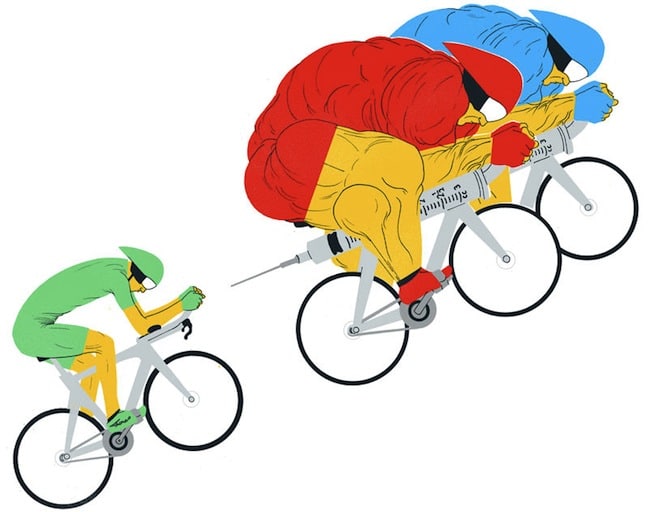
Doping (How Lance Armstrong lost his respect and dignity)

Doping is using drugs enhance your performance in sports. There are many articles on this but the two thing that strike me personally are: that it is so complicated and that he did it for about a decade! The way that USADA (US Anti-Doping Agency) was when one of his teammates told the world about this. Lance Armstrong wasn't the only person who did this, one report says that 12 out of 15 Tour De France were won by blood dopers. You can find out about doping herehere, or here.

Sunday, March 22, 2015

Particle That Allows Humans to Live Without Breathing

In a medical emergency, getting a person oxygen can be a matter of life or death. But thanks to an invention by a team of doctors at Boston Children Hospital, the medical community may have an easy fix for such circumstance: a particle that allows human beings to live without breathing. This microparticle, the hospital says, is made of a pocket of oxygen surrounded by a single layer of lipids and is injected into the bloodstream through a liquid substance.
In an article published in an issue of Science Translation Medicine, Dr. John Kheir of Boston Children Hospital's department of Cardiology explained that in a real world situation, where an animal's airway was completely blocked, the particle could keep it alive for at most 15 minutes.
Kheir told Fox News that his want to make the drug came from a patient treated at the hospital in 2006.
He was taking care of girl in the ICU who had terrible pnuemonia. She didn't have a breathing tube at the time when suddenly she had pulmonary hemorrhage-where lung tissue gets damaged actually dissolves into the pulmonary arteries. Her lungs became filled with blood and she went into cardiac arrest. Because it took almost 25 minutes to remove all the blood from her lungs, her brain was deprived of oxygen and was terribly damaged.
Kheir also told Fox News that the drug has the ability to save lives in emergency scenarios, such as drowning.
The hope is to have the drug kept on carts all around hospitals and outside hospitals on ambulances. When a patient is severely ill, the person attending them could easily save their life with this drug. The most common reason for cardiac arrest is breathing problems, after all. There's a real potential to improve the mortality and morbidity rates in hospital.

Tuesday, February 24, 2015

Creepy bugs live on YOU!!!!!!!!


This is a kind of creepy article that will educate you about something that you will never forget. YOU have microscopical bugs in your eyebrows!!!!!!! You can read about it here. We all have them in our eyebrows and eyelashes. You cant see them because they are about 0.3-0.4 mm long. If you are scared by this then read this article, it might make you feel better about yourself. (or nah)
photo credit

Thursday, February 12, 2015

Solar Flares

I found this intersting article on if a very powerful solar flare could destroy all the electronics on earth. Could an extremely powerful solar flare destroy all the electronics on Earth?

Saturday, January 31, 2015

20 Things You Didn't Know About Hibernation (Article)

"20 Things You Didn't Know About Hibernation" - Discover Magazine 

Did you know an American Black Bear can give birth to cubs without even waking up from hibernation? Click on the article below to read more amazing facts about hibernation.

Thursday, January 8, 2015

Ant Beetle & ICR Link

Check out the new link to the Institute for Creation Research (ICR) in the pages bar above.
This is a great website with lots of scientific information from a Biblical perspective.

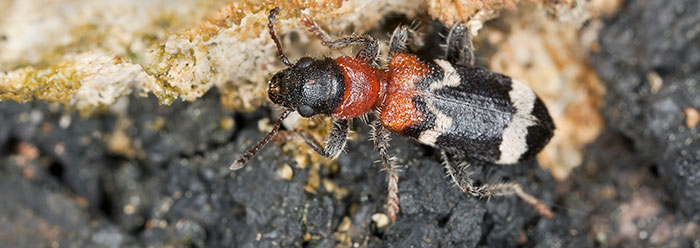
Here is a link to an ICR article about an Ant Beetle that has remain virtually unchanged throughout the fossil record! Students, this will make more sense as we go through the chapter about evolution. :)

Click here to read about these insects:  Amazing Ant Beetle Same Today as Yesterday

Tardigrades (Water Bears!)

This is a tardigrade (also known as a water bear or a moss piglet!), a REALLY cool aquatic invertebrate.  It's one of my favorite organisms.  Yes, this is a real image of one.  Here are some facts about them:
  • They are about the size of a poppy seed (1.5 mm).
  • They were first described by a German pastor named J.A.E. Goeze in 1773.
  • They can be found in just about every habitat on Earth. 
  • They are extremophiles.  They can survive in boiling water, solid ice, and in outer space (without oxygen)!  Find out how here.