Thursday, May 28, 2015
Strongest Biological Material Yet
And the award goes to... Limpet teeth! Limpets are mollusks with cone-shaped shells. They even beat spider's webs in strength. Some of you found limpet shells in Monterey last month. Why do they need teeth? Check out this article to learn more.

Why Do We Like Music?
People love music. Almost everyone has a favorite song, or a reason to listen to music. But why does it satisfy us? When the brain hears music, a special structure in the human brain is released. This structure is called dopamine. Dopamine is usually only released with eating and very addictive drugs. So when you hear a song and you like it, your body is liking it as well (your brain in particular). Even when you hear a song you'e never heard before; if you like it, your brain will release dopamine. Also, when you hear a new song that you like, your brain's memory changes; it adds "space" for you to memorize the song. So, in a way, if you like a new song, your brain already knows you'll listen to it again. This all shows just how amazing God created human beings.
Here are two songs I really like. The one above this is called "You Can't Stop Me" by Andy Mineo and the second one is called "Power Trip" by Lecrae. They're both Christian songs. Enjoy!
Here are two songs I really like. The one above this is called "You Can't Stop Me" by Andy Mineo and the second one is called "Power Trip" by Lecrae. They're both Christian songs. Enjoy!
志摩の看護師!


Dumbo Octopus

- Little is known about them
- They live on the ocean floor or hoover above it and others appear to be open water only
- There are 14 species
- They are suspected to live in every ocean
- Typically they're found at 100 to 5,00 meters underwater but have found at 7,00 meters
- They can make quick escapes and are excellent swimmers
- By dissecting females scientists have concluded that they mate all year long
- They lay eggs underneath rocks and shells and leave them on their own
- They eat their prey whole
- The ones that live on the bottom eat mainly crustaceans, bivalves, and worms
- The ones that live above the bottom eat pelagic copepods and small fish occasionally
Wednesday, May 27, 2015
Dropping a slinky
A slinky is a toy that is a flexible helical spring that can be made to somersault down steps. It's a toy that was invented by Robert T. James in 1943. But what happens when a slinky is dropped. The attached video shows a slinky being dropped. You can see that the bottom of the slinky appears to remain in one place as the top of the slinky catches up to. It almost looks like the slinky is floating in air. How does this happen? The gravity of the top of the slinky is pulling down and the spring tension of the bottom of slinky goes up. The rest of the video will explain more.
Tuesday, May 26, 2015
Sunday, May 24, 2015
What Causes Phantom Pains is Amputees?
Phantom pain is what most amputees feel at the end of the remaining part of their amputated appendage. While the exact cause of phantom pain remains unclear, it seems to originate in the brain and spinal cord. During MRI and PET scans, parts of the brain that were neurologically connected to the appendage show activity when a person experiences phantom pain. Most experts believe that phantom pains can be explained partially by having mixed signals sent to the brain. The spinal cord and nerve endings no longer have input for the missing appendage and try to adjust in unpredictable ways. This can trigger the most basic signal for something not being right: pain.
Studies show that, because the missing appendage can no longer receive sensory information, the information is sent somewhere else; from a missing hand to a cheek that is still present. When that cheek is touched, it's as if the missing hand is also being touched. This is just another version of tangled sensory wires, so it can result in pain.
Other factors believed to cause phantom pain include damaged nerve endings, scar tissue at the amputation site, and the physical memory or pre-amputation pain.
Studies show that, because the missing appendage can no longer receive sensory information, the information is sent somewhere else; from a missing hand to a cheek that is still present. When that cheek is touched, it's as if the missing hand is also being touched. This is just another version of tangled sensory wires, so it can result in pain.
Other factors believed to cause phantom pain include damaged nerve endings, scar tissue at the amputation site, and the physical memory or pre-amputation pain.
Saturday, May 23, 2015
Why do we have heart attacks?

Photo Credit (Warning: Not actual Image of a real heart) Source Credit
Heart attacks are caused mostly by blockage
or clots in the veins and arteries in the heart.
This can lead to the pain this can lead to the
pain that causes heart attacks. The action that
causes the pain is if the muscle dies, it offsets
the electrical stability of the heart, causing it
to go off its stable function, therefore, resulting
in a painful reaction in the chest that attacks on
the heart can cause.
Friday, May 22, 2015
Black Hole Facts

- Time slows down in black holes. According to Caleb Scharf if you threw a clock into one, assuming it wasn't destroyed, the ticking would slow down and eventually seem to freeze. The gravity inside one is so strong that it can slow down time.
- There is no possible way to escape a black hole without exceeding the speed of light, which is impossible.
- If you were to fall feet first into a black hole, the gravity at your feet would be stronger than at your head, causing you to be torn apart.
- They create a noise when stuff is pulled into them.
- They are incredibly dense. A black hole with the mass of earth would be 9 millimeters across. A black hole that could fit between Mercury and the Sun would have 4 million times the mass of our sun.
- Depending on their mass they can be put into one of the three main groups of black holes - supermassive, stellar, and miniature.
- Astronomers are certain that their is a supermassive black hole in the center of the Milky Way galaxy .
- You can't directly see a black hole because no light can escape from it.
- The first black hole discovered was Cygnus X-1 in the 1960s but wasn't identified as one until a decade later.
Thursday, May 21, 2015
アマミホシゾラフグが作るミステリーサークル!
This a new species of puffer-fish was found in Japan. Cool thing is that they make circles in sand to attract mates. Not very much is known about these species. They are very neon colored to not be seen in the very blue waters. They haven't made a real name for it in English yet so i had to use Japanese then i Google translated it then it said Zola Blowfish is the name. Article I used/Photocredit


Wednesday, May 20, 2015
I just visited San Francisco and crossed the Golden Gate Bridge. Last year I was able to walk on it. I think it is much bigger than it looks in the picture. The total length of the bridge is 8,980 feet and the elevation is 220 feet. Also, the bridge is not actually golden. The color is called international orange and painting the bridge is an on going. The Golden Gate bridge is a suspension bridge and it is built so it can move in an earthquake. The official opening of the bridge was May 27, 1937 and over 200,000 people walked across it that day. It took about 4 years to build the bridge.

Tuesday, May 19, 2015
The science of laughter!

Sunday, May 17, 2015
Hammerhead Sharks

Found in tropical and temperate waters worldwide,
far offshore and near shorelines, is the hammerhead
shark, one of the nine largest sharks in the world,
(It can grow up to 6 meters, 20 feet) and one of the
most interesting looking sharks, the head of the shark
has its shape to give the shark a wider and better visual
range, that is extraordinarily better than most sharks. It
also has the purpose of holding its sensory organs, and its
wide head allows it to scan the ocean for food. one group
of the sensory organs is the ampullae of the lorenzini, that
allows the shark to sense electrical fields generated by
animals in the sharks vicinity. This system can allow the
shark to spot prey such as stingrays that move slowy throuh
the sand and occasionally bury themselves under it.
Seahorses.

photo credit
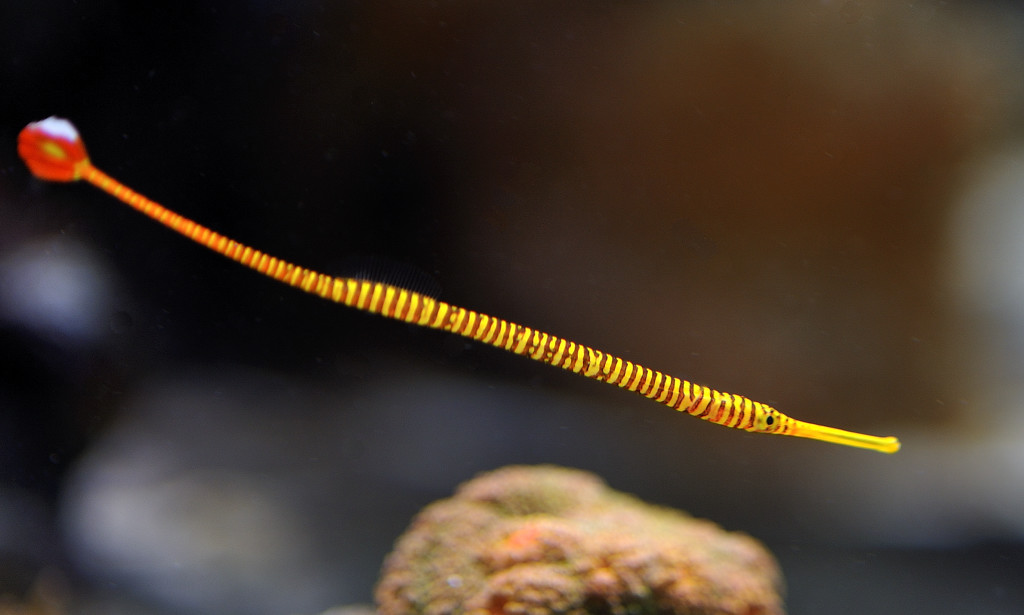
Pipefish
photo credit

Friday, May 15, 2015

Thursday, May 14, 2015
Can birds deliver messages?
The Shape Shifting Rain Frog!
This is a newly found species discovered on the slopes of the western Andes. These creatures are amazing because it can shape its form into something else like an octopus to blend in the with its surroundings in its swamp like environment in under 5 minutes. This is the first vertebrate that can shape shift which is super cool.
JPL | Videos | Curiosity's Seven Minutes of Terror
JPL | Videos | Curiosity's Seven Minutes of Terror
How did we land the Curiosity Rover on Mars? Click the link to watch the video. The 8th graders watched this in class.
How did we land the Curiosity Rover on Mars? Click the link to watch the video. The 8th graders watched this in class.
Wednesday, May 13, 2015
Bird
This is the New Zealand kiwi bird. This bird is only found in New Zealand. There are only about 70,000 Kiwi left. They are losing about 2% of there kiwi every year which is about 27 per week. Yes the kiwi is threatened with extinction.
The kiwi is mostly nocturnal. they live in forests and bush areas. They make dens or nests in hollow logs or dense vegetation. Kiwi are the only bird that have nostrils at the end of there bill. The nostrils are used for probing in the ground and sniffing invertebrates to eat, it also eats fruit that has fallen.
The kiwi has one of the largest egg-to -body weight ratios of any bird. The egg averages 15% of the females body weight compared to an ostriches egg. Female kiwi are larger than male kiwi birds. Depending on the species the kiwi can live up to 25-50 years. Adult kiwi usually mate for life.
doc.govt.nz
The kiwi is mostly nocturnal. they live in forests and bush areas. They make dens or nests in hollow logs or dense vegetation. Kiwi are the only bird that have nostrils at the end of there bill. The nostrils are used for probing in the ground and sniffing invertebrates to eat, it also eats fruit that has fallen.
The kiwi has one of the largest egg-to -body weight ratios of any bird. The egg averages 15% of the females body weight compared to an ostriches egg. Female kiwi are larger than male kiwi birds. Depending on the species the kiwi can live up to 25-50 years. Adult kiwi usually mate for life.
doc.govt.nz

Tuesday, May 12, 2015
Babies
Did you know that when babies are born they have more bones than adults do? They do, and that's because when they're born, not all of their bones, such as the skull are as one. So as a child grows, it's skull fuses together to form one bone. Did you also know that babies can't taste salt until they're about four months old? It's thought that the reason for this is because their kidneys process sodium at about that time. Also, the first all-female set of quintuplepts in the USA born since 1969 were born April 8, 2015. There was another set born in the 1980's, but two children died after birth. Photo Credit
 |
| Here are the quintuplets I was writing about. Their names are Ava Lane, Hazel Grace, Olive Marie, Parker Kate, and Riley Paige. (That is not in order, as far as I know.) |
Friday, May 1, 2015


Thursday, April 30, 2015
Giant Pacific Octopus
Giant Pacific octopuses are the largest octopus breed and live longer than any other type of octopus. Their height is up to 16 feet, their weight from 22 to 110 lbs, and their lifespan anywhere form 3 to 5 years. They have giant, bulbous heads and, while they camouflage like op most octopuses, are generally reddish-brown. Newborn octopuses are small enough to be classified under plankton, so their food must be equally small. They feed mostly on copepods and seas tars and crabs in the larvae stage. Hunting at night, adults primarily eat shrimp, fish, lobsters, and clams, though they have been known to attack sharks and birds. As for predators, many larval octopuses are lost to most any animal larger than it. Only the largest fishes and marine mammals pose a threat to adults. Humans are actually the biggest predators to the Giant Pacific Octopus, catching them for food, bait,mot to out in aquariums. http://www.aqua.org/explore/animals/giant-pacific-octopusTheir territory is mainly in the waters of the Pacific; from Southern California to Alaska and west from Aleutian Islands to Japan. A fact not known to many, their apes sages are called "arms" not "tentacles".
http://www.aqua.org/explore/animals/giant-pacific-octopus
http://animals.nationalgeographic.com/animals/invertebrates/giant-pacific-octopus/
(P.S. I tried at least 10 different pictures trying to get one to work, but they all said something was wrong with the URL, so that's why there's no picture.)
http://www.aqua.org/explore/animals/giant-pacific-octopus
http://animals.nationalgeographic.com/animals/invertebrates/giant-pacific-octopus/
(P.S. I tried at least 10 different pictures trying to get one to work, but they all said something was wrong with the URL, so that's why there's no picture.)
Decorator Crab

The decorator crab, also known as the dresser crab lives northern California to Baja California. They grow to about 5 inches and eat algae, sponges, bryozoans, small crustaceans. The crabs takes small animals and seaweed and attaches them to their back, where they have hooked stetae. The hooked stetae are like velcrolike bristles. They will also use poisonous seaweed. With this the crabs blend into their surroundings as long as they stay in that area. Once the crab is big enough to defend itself, it doesn't decorate it's shell but stuff will find their way there and attach. Their shells don't grow with them so in order to grow they must molt and get a new shell. When this happens they take off their decorations and put them on their new shell. So far the crabs aren't endangered. For more stuff go here.
Swell Shark!
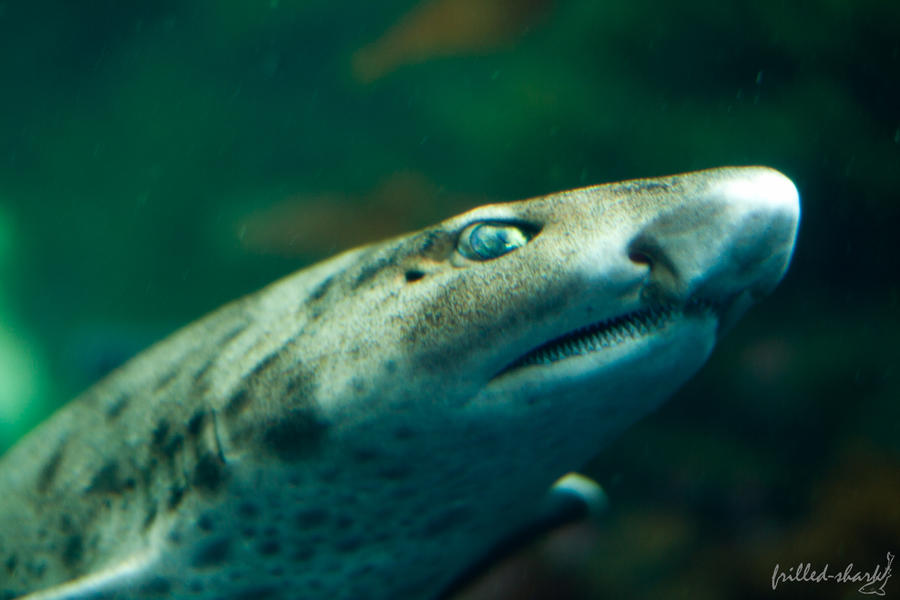
This is the swell shark they are carnivore creatures that dwell on the rocky seafloor of the pacific ocean. When threatened these guys will make an u shape of its body then swallow sea water to make itself look twice as big scaring off threats. In day they are usually harmless little creatures staying camouflaged on rocks. By night they dwell and eat fish or stay still with its mouth open for a fish to swim in. Sharks are cartilages which mean it has no bones which make these guys pretty flexible. These sharks lay leathery eggs that are causally mermaid purses. Depending on water temp. they could hatch in nine to twelve months.
This is a pic of a swell shark egg with the embryo inside.
This is a video a scuba diver took of a swell shark chillin on rocks
Wednesday, April 29, 2015
Green Sea Turtles

Green Sea Turtles are reptiles they can live up to be 80 years old. They get their name from an green layer of fat. They breathe oxygen but can hold their breath for 2 hours. They get rid of salt in their eyes by a salt gland near their eye. It makes them look like they are crying. When the females get out of the water to go onto the beach to lay their eggs they can lay up to 100 to 200 eggs. They usually eat jellyfish, mollusks, crab, squid, sponges, seaweed, and crustaceans. Green sea turtle will usually mate 2 to 4 years. They can get a disease and get multiple tumors on their skin and internal organs. Lots of trash left on beaches like plastic bags have been killing them off.
http://www.montereybayaquarium.org/animal-guide/reptiles/green-sea-turtle andhttp://www.nestonline.org

http://www.montereybayaquarium.org/animals-and-experiences/exhibits/sea-otters
The sea otter is a marine mammal. They are the second smallest marine animal and in the weasel family. They live their life mostly in water and dive for their food. They are also one of the few kinds of mammals that use tools to use for food like prying open clam shells. They eat urchins, abalone, mussels, clams, crabs, and snails. They live off the coast of northern and eastern North Pacific Ocean. Sea otters do not have thick blubber to keep them warm. They have the worlds thickest, heaviest fur and this keeps them warm. They have up to a million hairs per inch. Sea otters live in groups called "rafts". Their groups are very close with each other. When otters sleep, they sleep side by side with strands of kelp around them so they don't drift far away from each other. Sea otters play an important role in the ecosystem.
Sources: Montereybayaquarium.org and Defenders.org
Tuesday, April 28, 2015
Flamboyant Cuttlefish
 |
| Photo Credit |
 |
| This little guy's about to hatch. |
Pacific Blue Fin Tuna


Pacific Blue Fin Tuna are some of the fastest and
largest fish in the world. They are powerful swimmers
that are built for endurance and speed. Tuna's bodies
help conserve energy, their bodies are almost perfectly
streamlined. Being streamlined reduces drag around
their fins. Tuna Retract their fins so water can flow
over them more smoothly. Unlike most fish, Tuna are
warm blooded. Tuna can heat their body temperature
11 degrees Fahrenheit warmer than the surrounding
water. Pacific Blue Fin Tuna spawn near Okinawa,
near Taiwan and Japan, and in the sea of Japan.
Blue Fin Tuna while regularly swimming only swim
at around 5 miles per hour. Blue fin tuna while chasing
food can reach speeds of up to 62 miles per hour!
Sources: Signals Of Spring
Subscribe to:
Posts (Atom)